Jamia Masjid Srinagar – Historic Wooden Mosque & Cultural Landmark
Srinagar
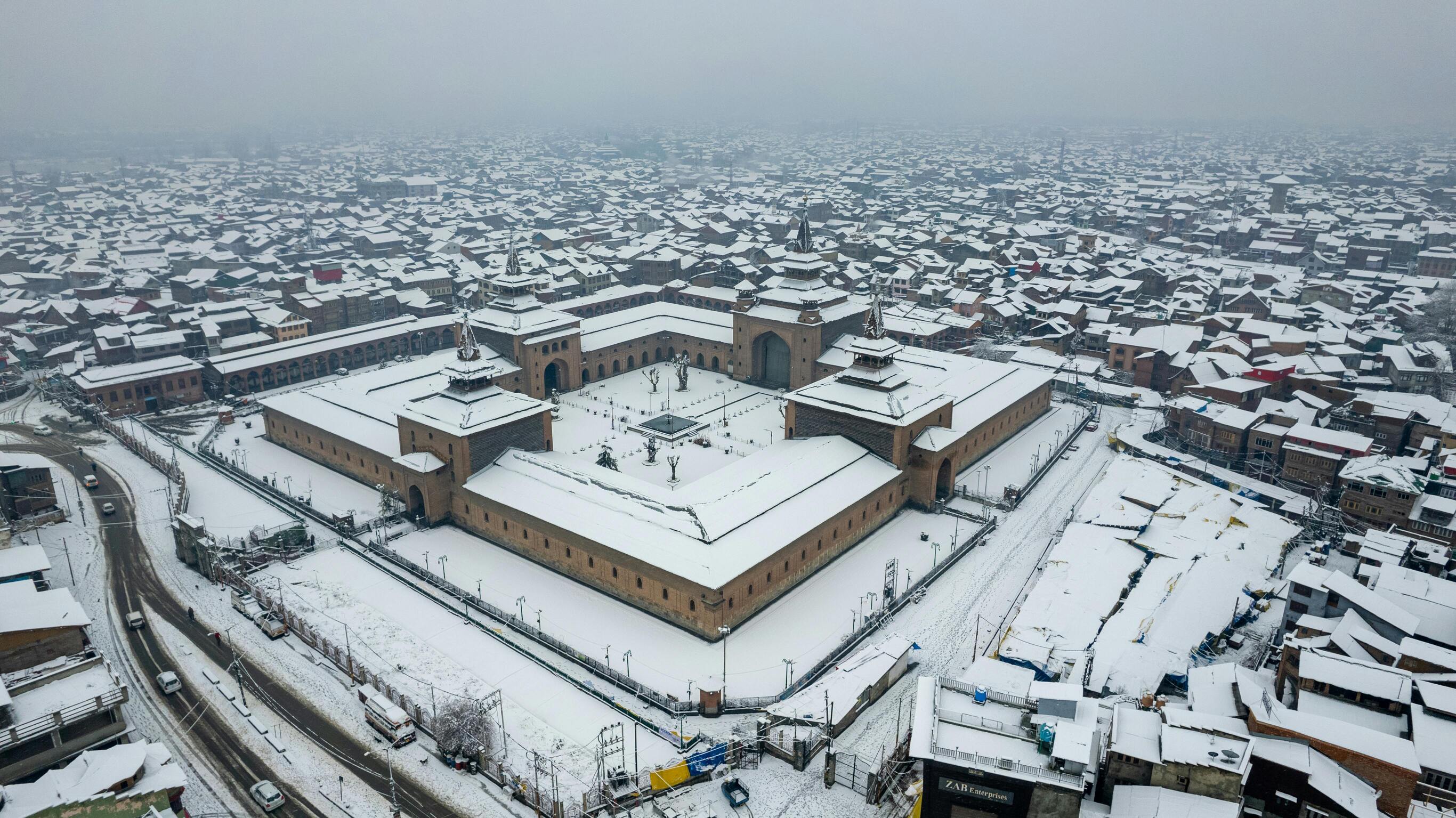
Jamia Masjid Srinagar, a 600-year-old wooden mosque, will stun you with its grand courtyard and mystical Indo-Saracenic architecture!
Jamia Masjid, Srinagar – A Complete Guide
Jamia Masjid Srinagar is one of the oldest, largest and most important religious landmarks in Kashmir. Located in the heart of the old city at Nowhatta, this historic Friday mosque stands as a powerful symbol of Kashmir’s spiritual, cultural and architectural heritage.
Built in the early 15th century during the reign of Sultan Sikandar Shah Miri, Jamia Masjid has remained a central place of worship for the people of Srinagar for more than six hundred years. Unlike many monumental mosques in India, Jamia Masjid is known not for domes and minarets, but for its unique wooden architecture, wide courtyard and peaceful atmosphere.
More than a place of prayer, Jamia Masjid represents the living history of Srinagar’s old city and its deeply rooted Islamic traditions.
🕌 A Masterpiece of Kashmiri Wooden Architecture
The most striking feature of Jamia Masjid is its beautiful use of Deodar wood and traditional Kashmiri construction techniques. The mosque is supported by a large number of finely carved wooden pillars, arranged in perfect symmetry across the prayer hall.
The open central courtyard is surrounded by covered corridors, allowing natural light and fresh air to flow freely through the complex. The simple yet elegant design reflects a blend of Persian and local Kashmiri (Koshur) architectural styles, creating a structure that feels both grand and deeply connected to its regional identity.
The calm layout and natural materials give the mosque a quiet and meditative character that visitors often find deeply moving.
📜 Historical Significance of Jamia Masjid
Jamia Masjid was established as the main congregational mosque of Srinagar and has played an important role in the religious and social life of the city for centuries. It has witnessed several historical events and periods of change in Kashmir, yet it continues to function as an active place of worship today.
Over time, parts of the mosque were restored and rebuilt, but the original design philosophy and architectural layout have been carefully preserved. For locals, Jamia Masjid remains a powerful symbol of faith, resilience and continuity.
For travellers, it offers a rare opportunity to experience living heritage rather than a monument frozen in time.
🌿 Courtyard, Prayer Hall & Peaceful Ambience
The wide courtyard of Jamia Masjid is one of its most memorable spaces. During non-prayer hours, visitors can quietly walk through the complex and observe the elegant symmetry of wooden pillars and shaded corridors.
The atmosphere inside the mosque is noticeably calm, even though it is located in one of the busiest parts of the old city. The gentle sounds of footsteps, distant market activity and birds create a peaceful contrast to the surrounding streets.
This serene environment makes Jamia Masjid not only a religious centre, but also a place for reflection and cultural appreciation.
🚶 Jamia Masjid & Old City Walking Experience
Jamia Masjid is ideally explored as part of a walking tour of Srinagar’s historic downtown. The mosque is surrounded by traditional bazaars, narrow lanes and long-established neighbourhoods that reflect everyday life in old Srinagar.
Many travellers combine their visit with nearby heritage spots such as Khanqah-e-Moula and continue their cultural exploration towards Dal Lake later in the day.
Walking through this area offers a much deeper understanding of Srinagar beyond its famous gardens and lakes.
🧕 Dress Code & Visitor Etiquette
As Jamia Masjid is an active place of worship, visitors are expected to dress modestly. Both men and women should wear clothing that covers shoulders, arms and legs. Women are advised to carry a scarf to cover their head while inside the mosque complex.
Visitors should remove footwear before entering the prayer areas and maintain silence, especially during prayer times. Photography should be done respectfully and only where permitted.
Following these simple guidelines ensures a comfortable and respectful visit for both travellers and worshippers.
🌄 Jamia Masjid and Other Cultural Landmarks
Jamia Masjid forms an important cultural link between Srinagar’s spiritual heritage and its popular tourist attractions. Many visitors include it alongside sites such as the Mughal Gardens and scenic areas around Dal Lake.
This combination allows travellers to experience both the natural beauty of Kashmir and the deep-rooted traditions of its people within the same day.
🗓️ Best Time to Visit
Jamia Masjid can be visited throughout the year. Early mornings and late afternoons are generally quieter for sightseeing. Fridays are particularly significant for prayers and can be very crowded, so travellers who prefer a peaceful visit may consider choosing other days of the week.
⭐ Why Jamia Masjid is a Must-Visit in Srinagar
Jamia Masjid is not just one of the largest mosques in Kashmir—it is the spiritual heart of Srinagar’s old city. Its wooden architecture, centuries-old legacy and peaceful courtyard make it one of the most meaningful cultural experiences in the region.
Whether you are exploring Srinagar for history, architecture or local life, a visit to Jamia Masjid at Nowhatta offers a powerful and authentic connection to the heritage of Kashmir.
Address: Jamia Masjid, Nowhatta, Srinagar, Jammu & Kashmir
Area: Srinagar | Category: Attractions
Features: Historic mosque, Wooden architecture, Large courtyard, Cultural heritage
Jamia Masjid is located in the old city area of Srinagar and is best reached by taxi or auto. Due to narrow lanes, visitors may need to walk a short distance to reach the mosque. The best time to visit is during the morning or afternoon hours, outside of main prayer times, to explore the architecture peacefully.
FAQs
Where is Jamia Masjid located?
It is located in the old city area of Srinagar.
Is Jamia Masjid open to tourists?
Yes, visitors are allowed outside prayer times.
What is special about the mosque?
Its wooden architecture and large courtyard are very unique.
Is there any entry fee?
No, there is no entry fee.
How can I reach Jamia Masjid?
You can reach it by taxi or auto from Srinagar city.